What Actually Happens to a Cracked Shingle When Water Freezes Inside It?
It may seem like a small problem. A tiny crack in a shingle, a slightly loose edge, or a small opening around flashing may not look like much from the ground. But when fall rain finds its way into one of those openings and temperatures later drop below freezing, the water inside can create additional stress on an already weakened area. That freeze-and-thaw cycle can turn a small roofing issue into a larger one over time. That's one reason October is a good time to look up and take a closer look at the condition of your roof before colder weather arrives.
Water Doesn't Need a Big Opening to Get Started
Your roof is designed to move water away from your home. Shingles shed most of the rain that lands on them, while flashing, valleys, vents, pipe jacks, and other roofing components help direct water around the areas where the roof changes direction or meets another material. But roofing materials are exposed to the weather year after year, and small areas can eventually become worn, cracked, loose, or unsealed.
A shingle doesn't need a large hole for water to find a path inside. A small crack or unsealed edge can be enough for moisture to get into an area where it shouldn't be. From the ground, these problems may be difficult or impossible to see. The roof can still look fine from the driveway while a small vulnerable spot is already allowing moisture to work into the roofing system.
When temperatures drop, that moisture can freeze. That's where things can get more interesting.
Why Does Freezing Water Expand?
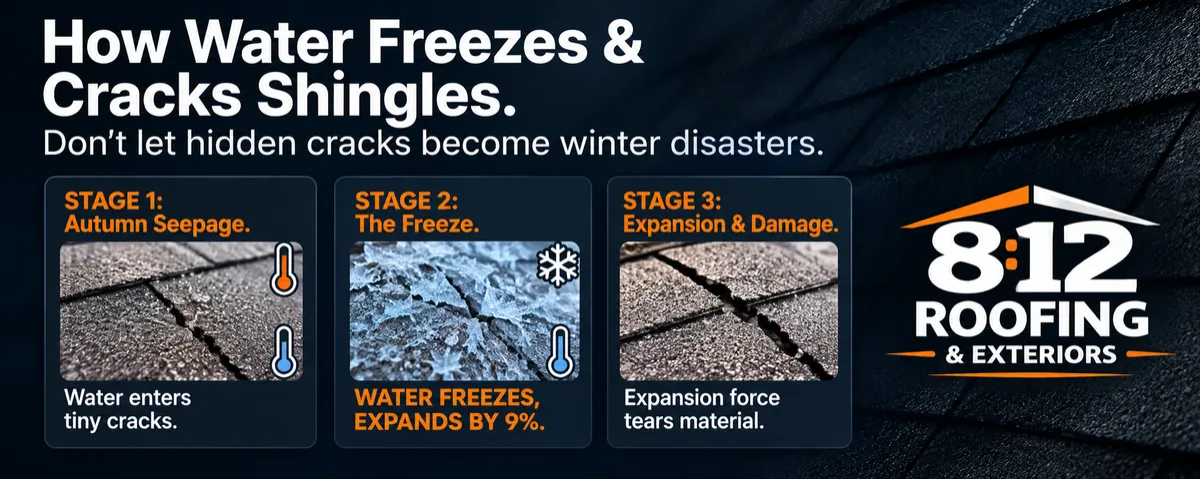
Water behaves differently from many other materials when it freezes. As liquid water turns into ice, its structure changes and takes up more space. The result is roughly a 9% increase in volume. On its own, that may not sound like much. But when water is inside a small crack or confined space, that expansion can put pressure on the surrounding material.
Imagine a small crack that has already developed in a shingle. Rainwater gets into the opening, temperatures fall, and the water freezes. As the water turns to ice and expands, it pushes against the material around it. If that area is already weakened, the additional pressure can contribute to widening the crack or stressing the surrounding asphalt binder. When temperatures rise again, the ice melts and the moisture can move through the same area. If another freeze follows, the process can happen again.
The important point is that one freezing event doesn't automatically mean a roof will fail. The concern is the repeated freeze-and-thaw cycle combined with an existing weakness in the roofing material. Over time, repeated exposure to changing temperatures, rain, wind, and other weather can continue to test the same vulnerable area.
How Can a Cracked Shingle Become a Bigger Problem?
An asphalt shingle is one part of a larger roofing system. Its job is to shed water and help protect the materials underneath. When a shingle develops a crack, that doesn't automatically mean the entire roof has failed. A small defect may remain small for some time. The problem is that a crack can create a pathway for moisture to move where it shouldn't.
Once water gets into that opening, weather conditions can continue to work against the damaged area. Freezing temperatures can cause moisture to expand, warmer temperatures allow the ice to melt, and additional rain can introduce more water into the same opening. Strong winds can also put stress on loose or compromised roofing materials.
The result isn't always an immediate leak inside the house. In fact, that's one reason roof problems can be easy to overlook. A small opening may not allow enough water through during every rainfall to create an obvious ceiling stain. The water may follow a different path through the roofing system before eventually showing up somewhere inside the home.
The Freeze-and-Thaw Cycle Is the Bigger Story
Think of a small crack as the starting point rather than the entire problem. During the fall, rain can reach the opening and work into the damaged area. When temperatures fall below freezing, that moisture can turn to ice and expand. That expansion can place additional pressure on the surrounding material. When the temperature rises again, the ice melts, allowing moisture to move through the area once more. If temperatures drop again, the process can repeat.
This matters because roofing systems don't experience weather one event at a time. Your roof can go through rain, freezing temperatures, thawing, wind, sunlight, and more rain throughout the season. A small weakness may be exposed to those conditions repeatedly. That's why a condition that seems minor during one inspection is still worth understanding and documenting.
Where Should Homeowners Pay Attention?
Shingles aren't the only part of the roof worth checking before winter. Some of the most important areas are the places where different roofing materials or roof components meet. Pipe jacks, for example, seal around plumbing pipes that pass through the roof. The flashing and seals around those penetrations help keep water out of an opening in the roofing system.
Flashing is another important area to inspect. Flashing helps direct water away from vulnerable transitions and roof penetrations, including areas around walls, chimneys, valleys, and other changes in the roof. If flashing becomes damaged or develops a problem, water may have an easier path into the roofing system.
Roof valleys also deserve attention because they collect and direct water as it moves down the roof. Vents are another area to consider because they create penetrations through the roofing system and rely on proper flashing and sealing to keep water out. Shingle edges and seams can also develop problems, especially when materials become worn, cracked, lifted, or no longer properly sealed.
Don't forget the gutters. While gutters aren't part of the shingle itself, they play an important role in moving water away from the roof and home. Leaves, debris, or drainage problems can interfere with that process and create another issue worth addressing before winter weather arrives.
Why You May Not See a Problem From the Ground
One of the frustrating things about roofing problems is that they aren't always obvious. You may look at your roof from the driveway and see what appears to be a perfectly normal roof. That doesn't necessarily tell you what's happening around flashing, under a shingle edge, near a roof penetration, or in another hard-to-see area.
A small crack can be difficult to spot. A weak seal may not be visible from the ground. A flashing issue may only become obvious when someone gets close enough to examine it. And even when a roof component looks fine from a distance, that doesn't tell you everything about its condition.
That's why a professional roof inspection should be about more than simply looking for something that appears broken. It should help document the condition of the roof and its important components so the homeowner has a clearer picture of what is actually there.
A Roof Inspection Doesn't Have to Be a Sales Pitch
A good inspection should answer questions, not create more of them. That's the idea behind a Forensic Roof Assessment (FRA). A Forensic Roof Assessment (FRA) is a clear, no-pressure inspection process designed to help a homeowner understand the condition of the roof.
The goal isn't to convince you that you need work. The goal is to find out what is actually there. That can include documenting relevant conditions with photos, explaining findings in plain English, and helping you understand what your next step should be. Sometimes that next step may be a repair. Sometimes it may be continued maintenance or simply keeping an eye on a specific area. And sometimes the roof may be in good shape.
That's useful information, too.
If everything looks good, we'll tell you that. A fake problem is a lousy way to build a real company. Homeowners deserve clear information they can understand without feeling pressured to make a decision they aren't ready to make.
Service comes standard.
Why October Is a Good Time to Look Up
October is a natural time to think about the transition from warmer weather into colder months. Fall rain can expose weaknesses that may have gone unnoticed during the summer, while freezing temperatures are still ahead. That makes this a practical time to understand the current condition of your roof.
You don't need to panic, and you don't need to assume your roof has damage just because colder weather is coming. The better approach is to get information before you need it. Knowing what condition your roof is in gives you a clearer starting point if something does change later.
You also don't need to climb onto the roof yourself. Roof surfaces can be slippery, especially after rain, and some roofing problems aren't easy to identify without the right experience. A professional assessment can provide a closer look while keeping the homeowner safely on the ground.
What Homeowners Can Look For
From the ground, homeowners can still pay attention to visible changes around the roof. Look for shingles that appear cracked, missing, lifted, or noticeably out of place. You can also watch for visible issues around flashing, debris collecting in valleys, or gutters that are full of leaves and other material.
Inside the home, pay attention to things that weren't there before, such as new water staining on ceilings or walls. If you notice something that concerns you, that doesn't automatically mean you have a major roofing problem. It simply gives you a reason to have the area looked at more closely.
The important thing is not to guess based on one thing you see from the ground. A roofing system has many components that work together, and the condition of one area doesn't always tell the whole story.
Documentation Makes the Next Step Easier
One of the biggest benefits of a professional inspection is having something more useful than a simple yes-or-no answer. Homeowners should be able to understand what was found and why it matters.
Photos can help show the actual condition of a roof component. Clear explanations can help you understand what you're looking at. Documentation can also make it easier to keep track of a condition over time.
You shouldn't have to take someone's word for it without understanding what you're being shown. Good roofing service should make the process easier, not more confusing.
That's part of our approach. We'll explain what we find, show you the relevant details, and help you understand the next step without turning the inspection into a pressure-filled sales pitch.
Don't Let the First Freeze Be Your Roof's First Test
Winter doesn't have to be a surprise. If there's a small crack, loose edge, or vulnerable roof detail, it's better to understand that condition before freezing weather arrives than to discover a problem after water has already made its way inside.
That doesn't mean every cracked shingle will become a major leak. It doesn't mean every roof needs work before winter. It simply means your roof deserves a closer look as the seasons change.
So this October, look up.
Take a few minutes to notice what you can safely see from the ground. Pay attention to your shingles, flashing, valleys, vents, pipe jacks, and gutters. If something doesn't look right, don't guess what it means. Get it documented and find out what you're actually dealing with.
A Fall Forensic Roof Assessment can give you photos, clear findings, and a simple next step before winter arrives.
No pressure. No guessing. Just a better understanding of the roof over your head.
Schedule your free, no obligation Fall Forensic Roof Assessment today.
812roofing.pro/fra
8:12 Roofing & Exteriors
Service Comes Standard.